.svg)


Solar Panels
Choosing the right solar panels, inverter and brand can be overwhelming. At Delex, we have already researched the market for you by attending industry fairs, analysing technical data and customer feedback, testing different products and installing them in our own homes. Every solution we offer is carefully selected for its quality, reliability, compatibility and price. We only recommend systems we genuinely believe in and are convinced that our product combinations offer an excellent price-to-quality ratio.

What does a photovoltaic system consist of?
A complete photovoltaic system is much more than just solar panels. Each component has a specific role and must work seamlessly with the others.
Solar panels
Capture sunlight and convert it into direct-current electricity.
Inverter
Converts the electricity generated by the panels into alternating current that can be used by your home or business. It is the central component of the installation.
Power optimisers — optional
Can be installed on individual panels to reduce production losses caused by shading, different roof orientations or differences between panels.
Monitoring application and Energy Management System
A mobile and web application allows you to monitor your solar production, consumption, battery level and grid exchanges. Depending on the system, the integrated Energy Management System, or EMS, can also optimise when the battery charges or discharges, manage dynamic electricity tariffs and increase your self-consumption.
Smart power meter — optional
Measures the electricity imported from and exported to the grid. It is generally required when a battery is installed, allowing the inverter and EMS to manage energy flows accurately.
Home battery — optional
Stores surplus solar energy so that it can be used later, for example in the evening, at night or when solar production is low.
Backup system — optional
Keeps selected electrical circuits powered during a grid outage. Depending on the chosen equipment, it can supply essential appliances or, in some cases, a larger part of the building.
The quality of a photovoltaic system depends not only on the individual products, but also on how well all its components are selected, combined, configured and installed.
Photovoltaics and EPB certificate
When you have your property assessed by an EPB certification body, the overall energy consumption of the building is taken into account. The certification body collects a series of data for this purpose, based on five specific indicators. These indicators all have an impact on the theoretical annual consumption of your building. By pooling this data, a so-called EPB certificate is generated.
This certificate offers the possibility to compare the energy performance of buildings on the market in an objective way.
Thus, among the specific indicators used in the preparation of the EPB certificate is the category "Use of renewable energy". This category detects and evaluates the presence of systems using renewable energy and/or producing electricity, including solar photovoltaic installations.
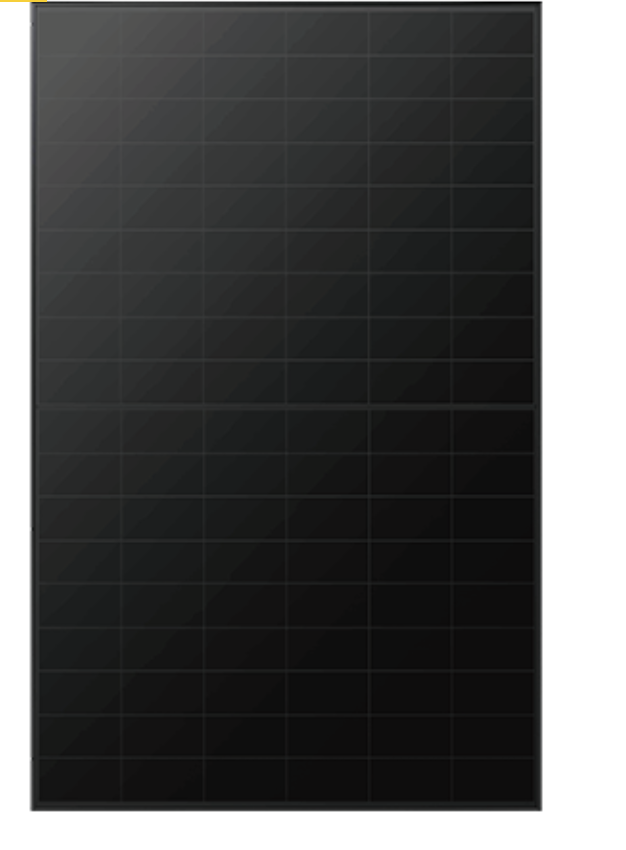
High-efficiency solar panels
We select solar panels from established manufacturers with a proven track record, and clearly documented warranties.
Our selection considers efficiency, long-term degradation, technology, appearance, dimensions, warranty conditions and overall value for money. Depending on the project, we may recommend different panel technologies, sizes or power classes.
The objective is not simply to install the panel with the highest wattage, but to choose the panel that delivers the best result for your specific roof. A 500 W panel may look more impressive on paper, but it can also be larger, more expensive and more difficult to install, meaning fewer panels may fit on the available surface.
What matters is the complete system design: power per square metre, expected annual production, roof layout, shading and installation cost. We therefore select the panel that offers the best overall performance for your property, not simply the biggest number on the datasheet.
- High-efficiency ABC technology
- Low long-term degradation
- Durable construction and documented warranties
- Selected according to the roof and project requirements
Download the brochure here.
Hybrid inverters, carefully selected
We work exclusively with hybrid inverters, so a compatible battery can be added later without replacing the inverter.
Every model we propose has been thoroughly evaluated—not only for its specifications, but also for its reliability, compatibility, software, technical support and real-world performance. We examine every detail before trusting an inverter in a client’s installation.
- Selected according to your grid connection and system size
- Single-phase solutions for smaller installations
- Three-phase solutions for larger projects, where compatible
- Mainly low-voltage battery systems for flexibility, safety and excellent value
- Free, integrated Energy Management System
- Simple mobile and web monitoring
- Optional backup power
- Up to 200% solar oversizing on selected configurations
- Reliable products with responsive technical support
- Personal assistance with the application and EMS after installation
Download the brochure here.
Download the brochure here.


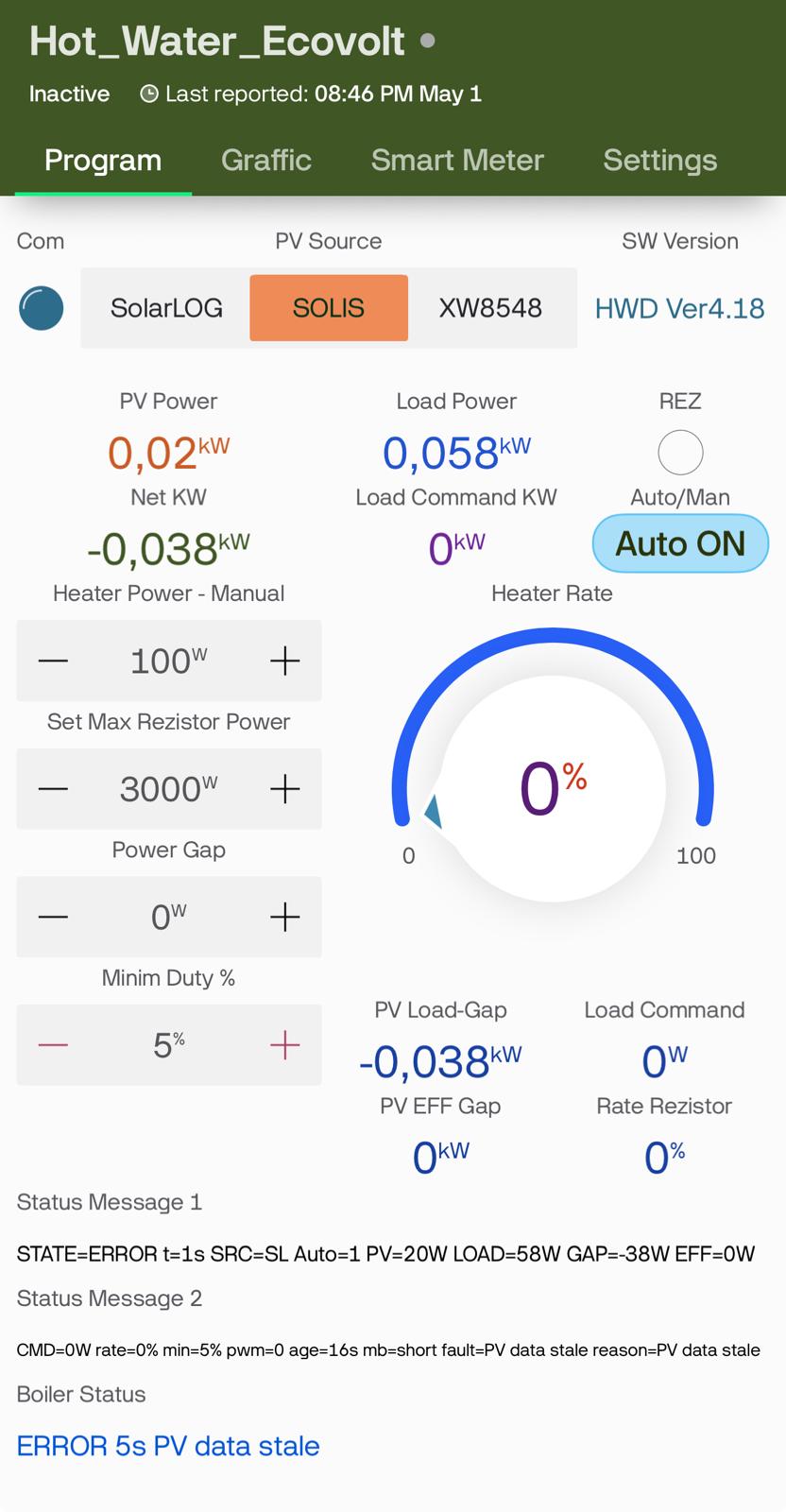
Smart Solar Surplus Control
Use more of your own solar energy instead of sending the surplus back to the grid. This optional paid solution monitors the available photovoltaic surplus and automatically redirects it toward heating water or controlling indoor temperature.
Option 1 — Smart electric boiler control
The controller continuously adjusts the boiler’s power according to the available solar surplus. Unlike a simple on/off system, it can regulate the heating power proportionally, helping to avoid unnecessary electricity consumption from the grid.
- Proportional control based on available solar power
- Automatic operation without daily intervention
- Mobile monitoring and remote control
- Integrated safety monitoring
- Turns surplus electricity into stored hot water
The boiler controller described in the presentation uses real-time surplus calculations and proportional PWM control rather than simple on/off switching.
Option 2 — Smart air-conditioning control
The system automatically manages a compatible Wi-Fi air-conditioning unit according to the available solar surplus and the desired indoor temperature. It can use excess solar energy for cooling during summer or heating during colder periods.
- Automatic heating or cooling with solar surplus
- Temperature-based intelligent control
- Protection against repeated compressor starts
- Automatic consumption calibration
- Control and monitoring from mobile or web application
Compatibility is checked before installation, as the controller requires a supported Wi-Fi air-conditioning system. The documented solution includes automatic surplus-based operation, temperature control, consumption calibration and anti-short-cycle protection.
Both options are additional paid solutions and are not included in the standard inverter Energy Management System.
Download the airco brochure here and the heatpump brochure here.
Power Optimizers
Power optimisers are not automatically necessary on every solar panel. We recommend them selectively when shading, different orientations or other roof conditions could meaningfully affect production.
This approach avoids unnecessary equipment and additional costs while improving performance exactly where optimisation provides a real benefit.
- Recommended only where technically justified
- Reduces losses caused by shade or panel mismatch
- Allows more flexible roof layouts
- Helps maximise the usable roof surface
Download the brochure here.

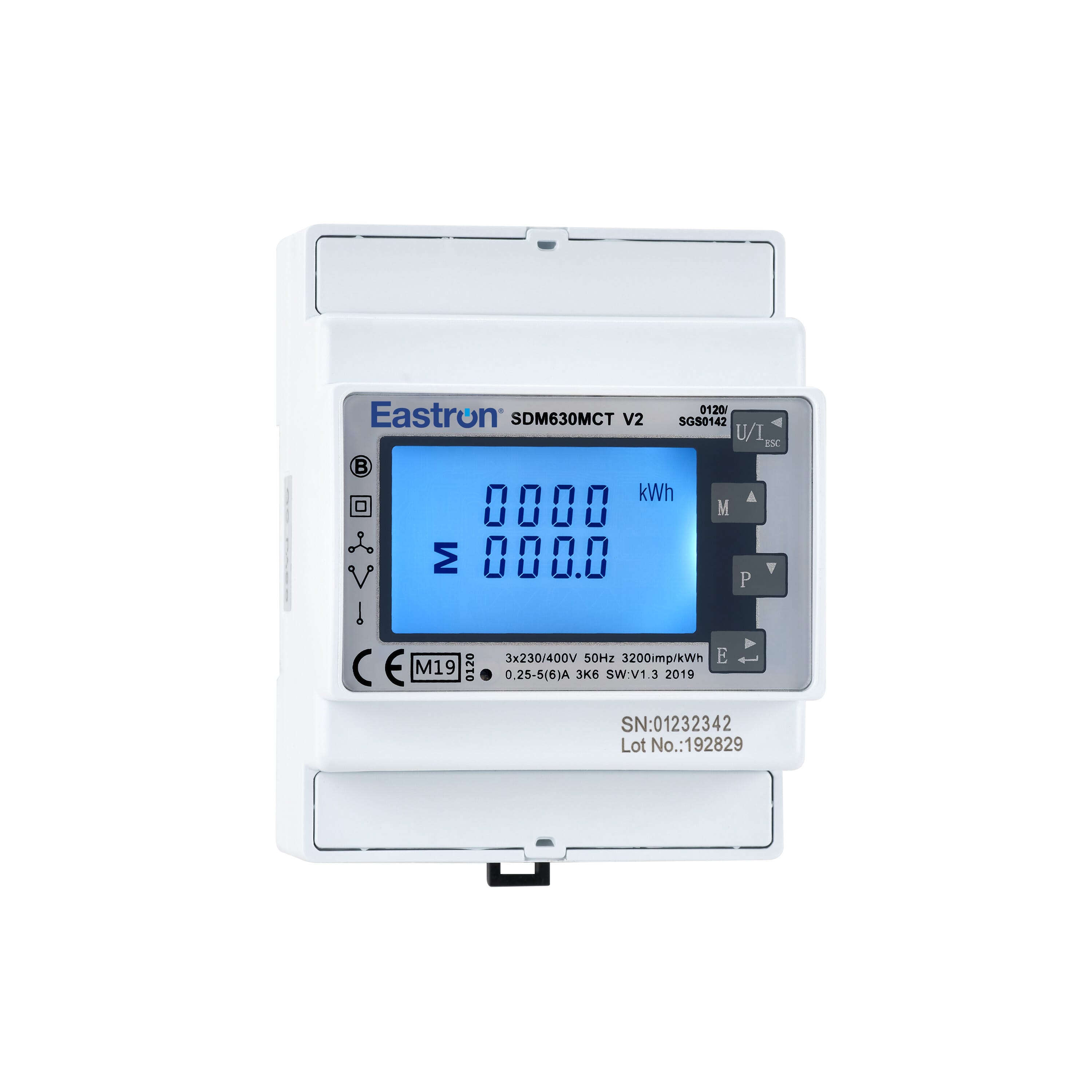
Smart energy measurement — when required
A smart power meter measures the exchange of electricity between the building and the public grid. It provides the information required by compatible batteries, energy-management systems, export-control functions and certain smart charging solutions.
We include this component only when it is required by the selected configuration.
- Measures grid import and export in real time
- Supports intelligent battery control for EMS systems.
- Helps increase solar self-consumption
- MID-certified measurement
- Compatible with 3 × 230 V and 3 × 400 V electrical networks
- Included only when technically necessary
Download the brochure here.
The app: Monitoring and intelligent energy management
The selected system includes a mobile or web platform that allows you to monitor solar production and system performance.
Depending on the proposed configuration, the platform may also display household consumption, battery status and grid exchanges. Compatible systems can include an Energy Management System that automatically optimises energy flows according to consumption, solar production, battery status and electricity tariffs.
- Monitoring from smartphone, tablet or computer
- Solar production and system-status overview
- Battery and consumption monitoring when supported
- Remote diagnostics and technical assistance
- Dynamic-tariff optimisation on compatible systems
Download the Solis mobile app here (Google Play Store) and here (Apple Store).

Solar Panels, Photovoltaic Panels, Thermodynamic Panels: What is the Difference?
Solar panels is a more generic terms of two types of panels:
a) Solar thermal panels for producing domestic hot water
b) Photovoltaic solar panels that produce electricity.
a) Solar thermal panels can be thermodynamic, or water based and they produce domestic hot water. Delex Belgium does not have solar thermodynamic panels and heat pumps in the portfolio.
b) Photovoltaic solar panels (also abbreviated PV panel or solar panels) are based on silicon solar cells, and they produce electricity. There are several types of photovoltaic solar panels, mostly used today are the monocrystalline which offer best price/kW ratio. Here is a short description of them:
- Monocrystalline
- Polycrystalline
- Solar film
Monocrystalline PV panels:
A single pure silicon crystal that has been divided into numerous cells is used to create these solar panels. Those panels are usually black and are the ones that Delex uses both for industrial and domestic installations. They are the most efficient, long lasting, and best looking of the 3 types but also the most expensive. They are the most common type on the market nowadays.
Polycrystalline PV panels:
As the title infers, these come from diverse silicon precious stones rather than one, giving them a light blue color. They are less space-effective, have lower warm resistance and are less productive in high-temperature situations but are cheaper to produce. Those panels are losing ground in favor of monocrystalline ones and Delex does not use them anymore.
Solar Film panels:
Thin-film panels are characterized by very fine layers and are thin enough to be flexible. Each panel does not require a frame, making it lightweight and easy to install. They come in a variety of sizes, depending on your needs. However, they are almost twice as less efficient than crystalline ones. Delex does not offer this type of panel.
What to Do Before and After Installing Your Photovoltaic Panels in Belgium?
