.svg)


House Batteries
House batteries, connected to solar panels via an inverter, store excess energy generated during the day for use during periods of low sunlight or power outages. They provide homeowners with greater control of their energy consumption and can be a cost-effective and sustainable energy strategy for the home.
How do house batteries work?
House batteries, also known as home energy storage systems, work by storing excess energy generated by solar panels during the day. This energy is then used during periods of low sunlight or power outages, reducing reliance on the grid. The batteries are connected to an inverter, which converts the direct current (DC) electricity stored in the batteries to alternating current (AC) electricity that can be used to power household appliances. The inverter also manages the charging and discharging of the batteries, ensuring that they are always charged and ready for use. Overall, house batteries provide homeowners with greater control over their energy consumption and can help to reduce energy costs while promoting sustainability.
Find out what your advantages are with house batteries !
✓ Reduce grid reliance
✓ Lower energy costs
✓ Increased control
✓ Promote sustainability
✓ Power backup
✓ Long lifespan
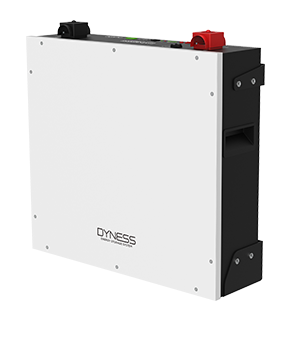
Dyness: DL5.0C
Why Dyness DL5.0C – 5.12 kWh Low-Voltage Battery ?
- Dyness is an established energy-storage specialist, selected for its excellent price-to-quality ratio and broad compatibility with leading inverter brands
- Low-voltage LiFePO₄ battery, compatible with Solis low-voltage inverters
- 5.12 kWh usable storage capacity per module
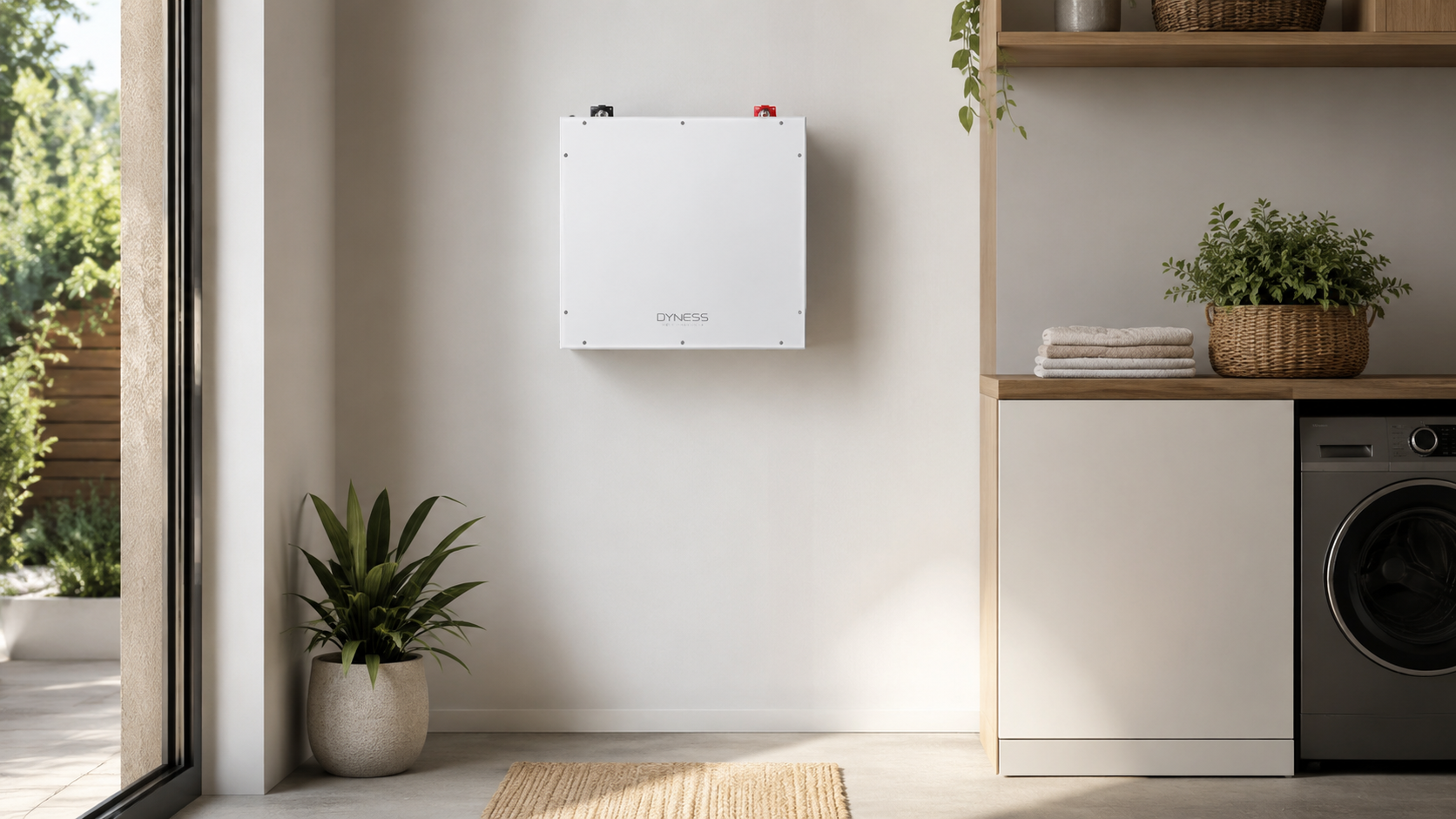
- Wall-mounted installation included as standard
- Ideal for rooms with limited floor space
- Installation above floor level offers additional protection against humidity and minor flooding risks
- Expandable up to 50 modules, for a maximum capacity of 256 kWh
- Two modules provide 10.24 kWh of storage and can charge or discharge at approximately 5.12 kW under normal recommended settings
- Long service life, safe battery chemistry and reliable backup performance
Download the brochure here.
Dyness PowerDepot G2 5.12 kWh
• Outdoor-ready IP66 version of the previously presented Dyness DL5.0C
• Designed for areas exposed to dust, humidity and changing weather conditions
• 5.12 kWh low-voltage LiFePO₄ battery, compatible with Solis low-voltage inverters
• Rated for at least 8,000 cycles, compared with 6,000 cycles for the DL5.0C
• Wall-mounted or floor-mounted installation for flexible placement
• Integrated aerosol fire-protection system for additional safety
• Expandable up to 50 modules, providing a maximum capacity of 256 kWh
• Excellent price-to-quality ratio, long service life and reliable backup performance
Download the brochure here.
Dyness PowerBrick MAX – 16 kWh Floor-Mounted
• Floor-mounted alternative to the previously presented Dyness batteries
• Offers the best price per kWh among the proposed battery options
• 16.07 kWh low-voltage LiFePO₄ battery, compatible with Solis low-voltage inverters
• Suitable for larger residential energy-storage and backup requirements
• High storage capacity in a single compact battery unit
• Expandable by connecting additional identical PowerBrick MAX batteries in parallel
• The main limitation is that capacity can only be expanded in additional 16.07 kWh steps
• Smaller Dyness modules or different battery models cannot be combined within the same battery bank
Download the brochure here.